What’s the T5 Investment Income tax slip?

- A T5 is a tax slip that reports investment income earned in a non-registered account, including interest, dividends and specific foreign income.
- If you earned less than $50 from a single payer, you may not receive a T5, but you still need to report that income on your tax return.
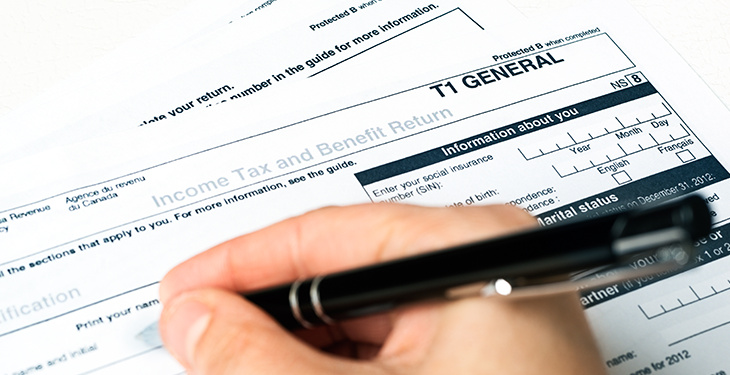
- The amounts on your T5 correspond to lines on your T1 General Income Tax and Benefit Return.
- Financial institutions must issue T5 slips by March 1, 2027 for the 2026 tax year.
- There are common mistakes to avoid, including reporting the wrong dividend amount, misallocating joint income and filing before all your tax slips have arrived.
Tax season comes with no shortage of paperwork, and if you earn investment income outside a registered account, a T5 slip is likely one of the documents you’ll receive. Understanding what it reports, why it matters and how it can affect your tax return can help you avoid mistakes and feel more confident when filing.
Here’s everything you need to know about how the T5 slip works and how to report investment income on your tax return this year.
In this article
What is a T5 slip?
A T5 slip reports investment income you earned in your non-registered account(s) during the year. If you hold investments outside a registered account, like a Registered Retirement Savings Plan (RRSP), Tax-Free Savings Account (TFSA) or First Home Savings Account (FHSA), this slip helps you identify what needs to be reported on your tax return.
A single T5 can report more than one type of income. This might include interest, eligible and non-eligible dividends from Canadian corporations and specific foreign investment income. It also might show related tax credits, depending on your investments, so you know how each amount should be reported when you file.
There are several numbered slips you might receive at tax time, especially if you hold a mix of investments. Here’s how the T5 compares to the T3 and T4:
|
T5 |
T3 |
T4 |
What it reports |
Interest, dividends and specific other investment income earned in non-registered accounts |
Income and capital gains distributed from trusts, including many mutual funds and exchange-traded funds (ETFs) |
Earned employment income |
Who issues it |
Banks, financial institutions, corporations and other payers |
Trust, mutual fund or ETF administrators |
Your employer |
When it’s typically issued |
By the last day of February, or the next business day if the deadline falls on a weekend or Canada Revenue Agency (CRA)-recognized holiday |
Within 90 days of the trust’s year-end, often by the end of March |
By the last day of February |
While these slips may look similar, they report different types of income. Knowing the difference can help you understand the source of your income and ensure that you’re reporting it correctly on your tax return.
Who receives a T5 slip?
You’ll generally receive a T5 slip if you’re a Canadian resident who earned reportable investment income through a non-registered account. If you hold investments across multiple institutions, you’ll likely receive a separate T5 from each one. You need to combine all taxable amounts from these slips on your tax return.
There’s one exception worth noting: If you earned less than $50 in reportable investment income from a payer, the institution isn’t required to issue you a T5. But this doesn’t mean that income is tax-free. You still need to report all investment income you earned, whether or not a slip arrived in the mail.
Do you need to submit a T5 for your TFSA or RRSP?
No, for income earned inside a registered account, such as an RRSP or a TFSA, you won’t receive a T5. That’s because these accounts are tax-sheltered, meaning investment income earned isn’t subject to taxation while it remains inside the account. This is one of the key advantages of registered accounts. Plus, withdrawals from a TFSA are always tax-free. A financial advisor can help you determine how these accounts might fit into your broader financial plan.

What’s included on the T5 slip?
The T5 organizes information into numbered boxes that report different types of investment income and related tax information. Most investors only need to focus on a handful of these when reviewing their slip before filing:
- Boxes 10 and 11 report the actual and taxable amounts earned from non-eligible dividends, which are paid by companies that are subject to a lower corporate tax rate (often privately held small businesses).
- Box 12 reports the dividend tax credits for non-eligible dividends.
- Box 13 reports interest earned from Canadian sources.
- Box 15 reports gross foreign income, generally in Canadian dollars. Don’t subtract any foreign tax withheld from this figure when you file your return.
- Box 16 reports foreign tax paid, which may support a foreign tax credit.
- Boxes 24 and 25 report the actual and taxable amounts earned from eligible dividends, which are funds paid from a company’s income that has been taxed at the general corporate tax rate.
- Box 26 reports the dividend tax credit for eligible dividends.
- Box 27 identifies the foreign currency when amounts aren’t reported in Canadian dollars. If this box is blank, the CRA will process the amounts as Canadian dollars.
How to report investment income on your tax return
You need to report the amounts from your T5 on your T1 General Income Tax and Benefit Return. Each figure from your T5 must be entered on the corresponding line for that type of income or credit. This is true even for income under $50 that didn’t come with a slip: you still have to report it on your tax return.
Here’s a breakdown of the key lines on your T1 used to report investment income:
- Line 12100 reports interest and other investment income, including foreign interest and dividend income.
- Line 12000 reports the total taxable amount of eligible and non-eligible dividends from taxable Canadian corporations. Line 12010 separately identifies the portion of that total made up of non-eligible dividends.
- Line 40425 is used to claim the federal dividend tax credit shown on your T5.
- Line 40500 is used to claim a federal foreign tax credit if you paid foreign tax on interest or dividend income. Note: you may be able to claim a provincial or territorial credit on Form 428. Foreign dividends don’t qualify for the Canadian dividend tax credit.

Important tax deadlines to remember
Missing a deadline can result in penalties and interest charges. Keeping track of these important dates can help you avoid unnecessary costs and last-minute stress. Here are some of the key deadlines for the 2026 tax year:
- March 1, 2027: The deadline for financial institutions to issue T5 slips for the 2026 tax year.
- April 30, 2027: The deadline for most individuals to file their 2026 tax return and pay any balance owing.
- June 15, 2027: The deadline for self-employed individuals and their spouses or common-law partners to file their 2026 tax return.
If you miss the filing deadline, you could face a late-filing penalty of 5% of the balance owing, plus 1% of that balance for each full month it’s overdue, up to 12 months. Marking these dates on your calendar can help you avoid a preventable cost later.
Common T5 mistakes to avoid
When it comes to the T5, there are a few common mistakes investors make. Knowing what to look for can help you avoid them when filing your return this year:
- Reporting the actual dividend amount instead of the taxable amount: Both amounts appear on the slip, which makes it easy to choose the wrong one. It’s important to use the taxable amount shown in Box 25 for eligible dividends or Box 11 for non-eligible dividends.
- Not reporting investment income under $50: If you earned less than $50 from a single payer, you may not receive a T5. However, that income is still taxable and must be reported on your return. Review your account statements to ensure nothing gets missed.
- Misallocating income from a joint account: If you have a joint account, generally only one T5 is issued in the name of both account holders. Typically, account owners report their share of the income based on their relative contributions, rather than a fifty-fifty split. Splitting your income evenly when contributions weren’t equal can trigger CRA scrutiny.
- Overlooking a foreign tax credit: If box 16 shows foreign tax paid, you may be eligible to claim a foreign tax credit. This can reduce double taxation by providing relief for taxes already paid to another country.
- Filing before every tax slip has arrived: T5 slips don’t necessarily account for all the investment income you earned in a year. For example, if you hold ETFs or mutual funds, your T3 slip might not show up until the end of March. Filing too early may mean amending your return once that slip finally arrives.
The bottom line
The T5 slip is an important document if you earn investment income from a non-registered account. Understanding what it reports, how to apply it to your tax return and which credits might apply to you can go a long way toward a smoother tax season. A financial advisor can help you understand how investment income fits into your broader tax strategy and identify opportunities to improve your tax efficiency over time.

FAQs
Why might you not receive a T5 slip?
A payer isn’t required to issue a T5 slip if the total reportable amount paid to you is under $50 for the year or if the income was earned inside a registered account. However, you still need to report all taxable investment income even if you didn’t receive a slip.
What are the reporting requirements if you live in Quebec?
If you’re a Quebec resident, you may also receive an RL-3 (Relevé 3 – Investment Income) to report investment income on your provincial return, in addition to a federal T5 for your federal filing.
Will each person receive a T5 for joint accounts?
No. Generally only one T5 is issued for a joint account in both account holders’ names. As the account owner, you generally have to report your share of the income based on your relative contributions rather than dividing it evenly by default.
What’s the difference between a T3 and a T5 slip?
A T5 reports interest, dividends and certain foreign investment income paid by banks, financial institutions, corporations and other payers. If you’re invested in a Fidelity Corporate Class investment, you may receive a T5. By comparison, a T3 reports income and capital gains allocated by trusts, including mutual fund trusts and ETFs structured as trusts. The two slips cover different types of investment structures, so you may receive one, the other or both, depending on what you hold.