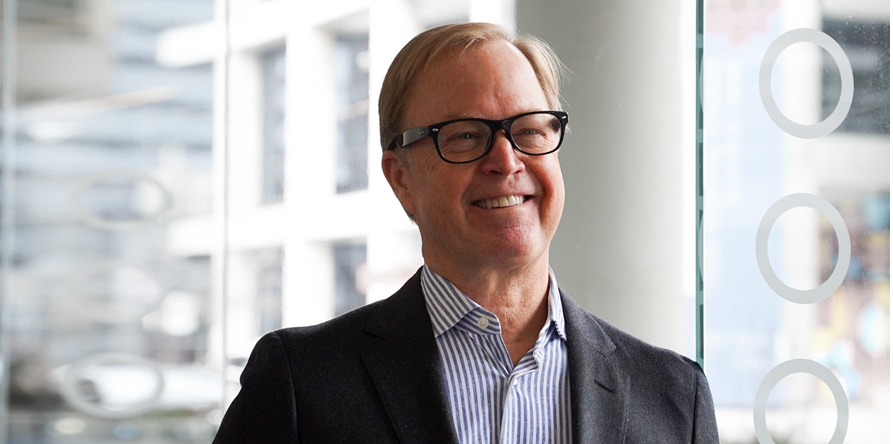
A midyear look at what is driving markets: Insights from Andrew Marchese - June 2, 2026
Markets are absorbing a range of signals, from economic slowdown concerns to strong corporate performance and shifting global dynamics. Amid this complexity, Andrew Marchese, Fidelity’s Chief Investment Officer and Portfolio Manager, points to a more fundamental driver of investment outcomes: corporate earnings. While Canada has entered what has been described as a technical recession, he emphasized that economic labels alone do not always reflect where opportunities may lie. Instead, the focus should be on the global earnings backdrop and how it is evolving.
Here are some of the key points from his commentary.
Looking beyond recession headlines
Corporate profits remain a key foundation for investing. Global earnings environment began the year in a strong position and has continued to improve, even as economic concerns have increased. Past cycles have shown a disconnect between economic trends and profit growth. At times, economies can appear stable while profits weaken and the reverse can also occur.
Valuations matter, but opportunities vary
Valuations continue to play an important role, though they are not viewed as a direct trigger for market corrections. Instead, they can help guide where investors may need to be more selective. In some areas, expectations appear to reflect ideal growth outcomes. In others, there may be opportunities to access growth at more reasonable valuations. The result is a more varied landscape where careful selection becomes increasingly important. Rather than viewing the market as a single opportunity set, the emphasis is on identifying areas where pricing may not fully reflect underlying fundamentals.
Geopolitics and commodity risks
Geopolitical developments remain an important consideration. Ongoing tensions in the Middle East, for example, could affect commodity supply if disruptions persist. Higher input costs may place pressure on corporate margins and could lead to downward revisions in earnings expectations over time. While this risk is not viewed as central, it is one that warrants monitoring, particularly if markets have not fully accounted for it.
Navigating speculation and short-term market behaviour
In some areas, market activity has taken on a more speculative tone. Andrew described this as a “casino-like” dynamic, where strong investor enthusiasm can lead to short-term moves that are not always grounded in fundamentals. Significant investment flows have supported real growth and innovation, but expectations may at times move ahead of underlying business fundamentals. History suggests that periods of strong investment momentum can eventually slow, and when they do, market reactions can be sharp. In this environment, distinguishing between companies with durable business models and those driven more by expectations becomes increasingly important.
Deglobalization and the role of self-reliance
A longer-term shift shaping markets is the move toward a less globalized world. This change has been gradual but meaningful, with countries reassessing trade relationships and economic priorities. For Canada, this shift brings both challenges and opportunities. With greater uncertainty around traditional trade partners, there is increased focus on developing new alliances and strengthening domestic capabilities. This includes investment in infrastructure and key industries such as energy, transportation, defence and aerospace. At the same time, Canada’s natural resources may take on greater importance, particularly as supply chains evolve and geopolitical considerations become more prominent.
Inflation and portfolio positioning
Inflation remains an important factor for investors, particularly if it proves more persistent than in past cycles. Structural forces such as money supply growth and potential supply constraints may contribute to this environment. In response, diversification plays a key role. Equities can provide some level of protection, while exposure to hard assets such as commodities may help address inflation risks. A balanced approach becomes especially important, allowing portfolios to navigate different economic scenarios without becoming overly reliant on a single outcome.
A disciplined approach to long-term investing
Across all themes, the emphasis returns to balance and discipline. Market cycles often bring strong performance in specific sectors or themes, but these periods can also lead to crowded positioning and increased volatility. A more measured approach can help avoid reacting to short-term moves and maintain focus on long-term objectives. It also allows for the identification of opportunities that may arise when capital flows concentrate in specific areas of the market.
AI and the question of long-term winners
Artificial intelligence remains a key area of focus. Early leaders, particularly in semiconductors, have driven strong performance to date. However, longer-term outcomes are less certain. Drawing on previous technology cycles, Andrew noted that early leaders are not always the companies that ultimately benefit the most. This reinforces the importance of maintaining flexibility and avoiding overconcentration in any one theme.
Staying focused in a changing environment
Markets continue to be shaped by a combination of economic shifts, geopolitical developments and evolving investment cycles. Taken together, his comments pointed to the value of focusing on earnings strength, valuation discipline and balance in a changing market environment.